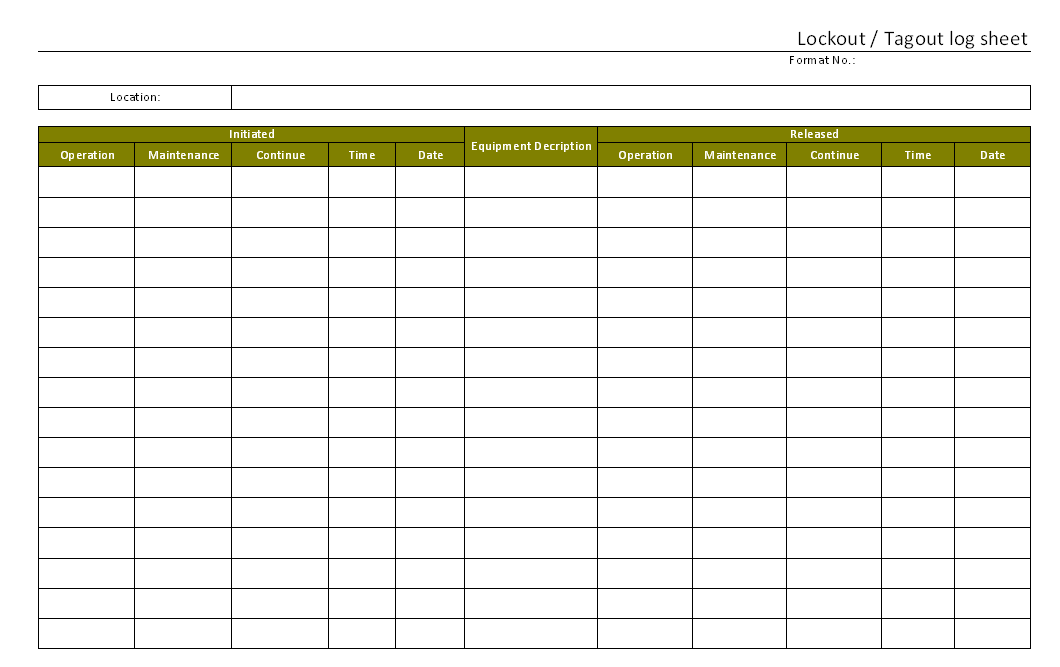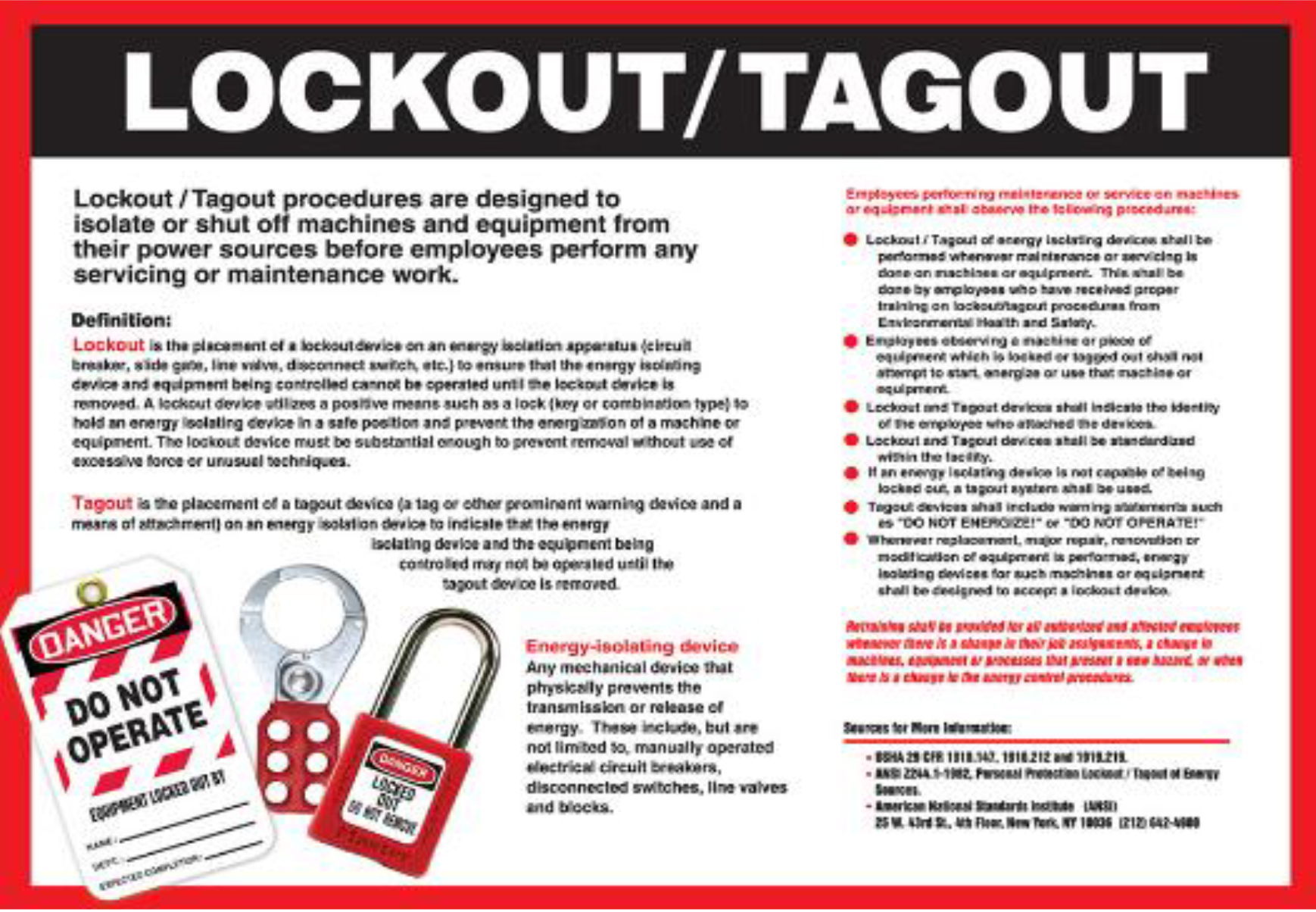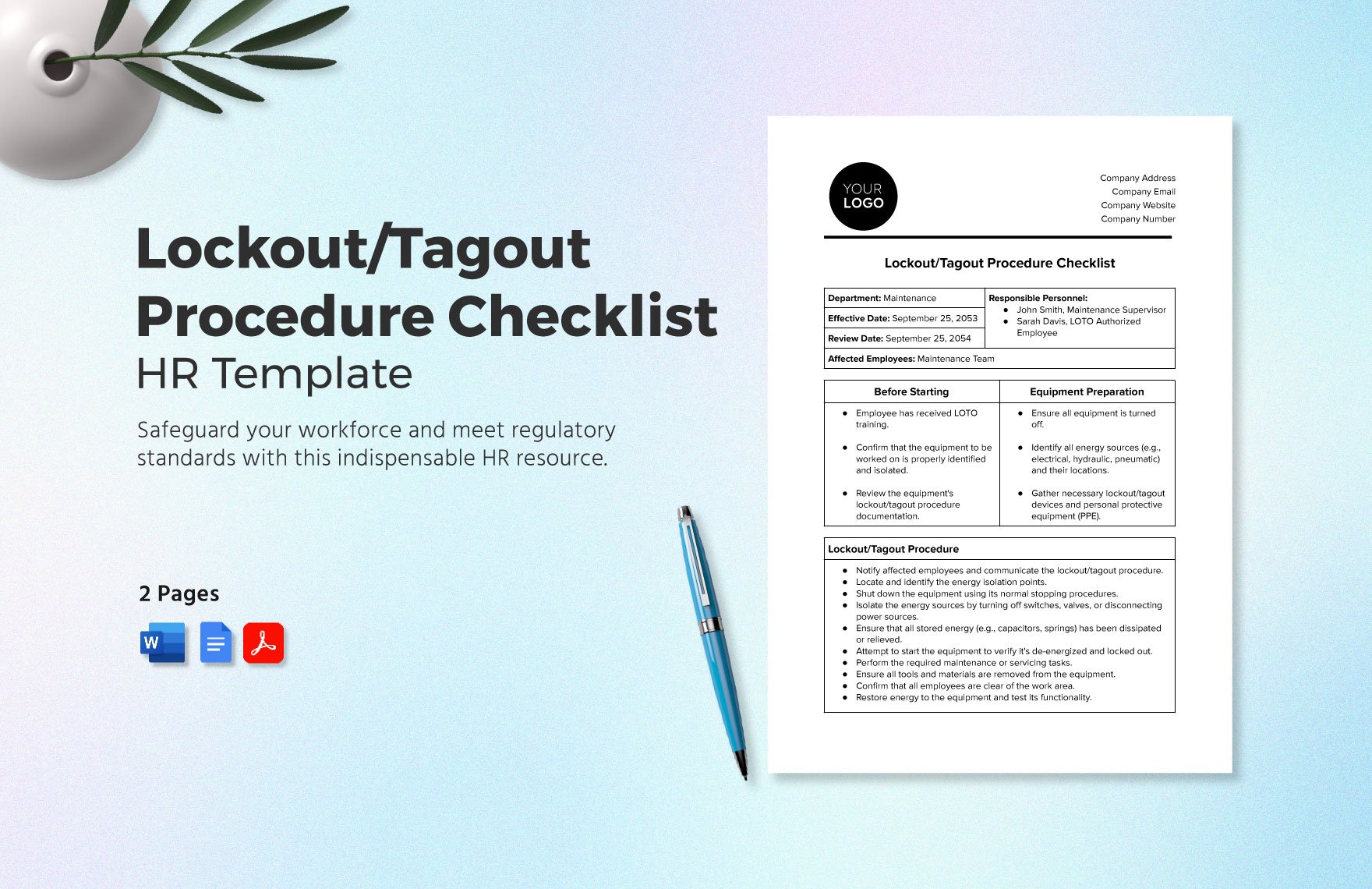
In manufacturing, maintenance, and industrial operations, a single moment of oversight during equipment servicing can lead to catastrophic injury. One of the most effective safeguards against such incidents is a properly implemented Lockout Tagout (LOTO) procedure. Yet, many small to mid-sized businesses delay compliance—not because they don’t recognize the risk, but because they struggle to develop a clear, actionable plan from scratch. That’s where a free lockout tagout procedure template becomes invaluable.
A well-structured LOTO template eliminates guesswork, accelerates compliance, and ensures consistency across teams. More than just a document, it’s a blueprint for safety culture. This guide walks you through everything you need to know about using and customizing a free LOTO procedure template—complete with practical insights, common pitfalls, and real-world applications.
Why You Need a Lockout Tagout Procedure (and Template)
Lockout Tagout is a safety protocol used to disable machinery or equipment during maintenance or servicing, ensuring that hazardous energy sources—electrical, mechanical, hydraulic, pneumatic, chemical, or thermal—cannot be accidentally activated.
OSHA standard 29 CFR 1910.147 mandates that all employers implement a formal LOTO program. Non-compliance doesn’t just risk employee safety; it opens the door to fines exceeding $15,000 per violation. Even more concerning, the U.S. Bureau of Labor Statistics reports that failure to control hazardous energy accounts for nearly 10% of serious accidents in industrial settings.
A free LOTO procedure template simplifies compliance by offering a ready-to-adapt structure. Instead of building from a blank page, you can focus on filling in equipment-specific details, training your team, and auditing execution.
Real-world example: A small fabrication shop avoided a potential electrocution when a technician used a standardized LOTO form from a free template to isolate a malfunctioning press brake. The form prompted him to verify zero energy state—something he’d previously skipped under time pressure.
What a Quality Free LOTO Template Should Include
Not all free templates are created equal. Many are overly generic or miss critical compliance elements. A truly effective free lockout tagout procedure template should include these core components:
#### 1. Energy Control Plan Summary A high-level overview of the program, including scope, purpose, and responsibilities.
#### 2. Equipment-Specific Procedures Step-by-step instructions for each machine, detailing: - Type of energy source - Shut-off points - Lockout device locations - Verification methods
#### 3. LOTO Roles and Responsibilities Clear definitions for: - Authorized employees (those who perform LOTO) - Affected employees (those who operate or use equipment) - Supervisors (those who enforce compliance)
- #### 4. Lockout Sequence A standardized 6-step process:
- Notify affected personnel
- Shut down the equipment
- Isolate energy sources
- Apply lockout/tagout devices
- Release stored energy
- Verify isolation (zero energy state)
#### 5. Tagout Form Fields Placeholders for: - Employee name and ID - Date and time of lockout - Equipment ID - Reason for service - Signature fields
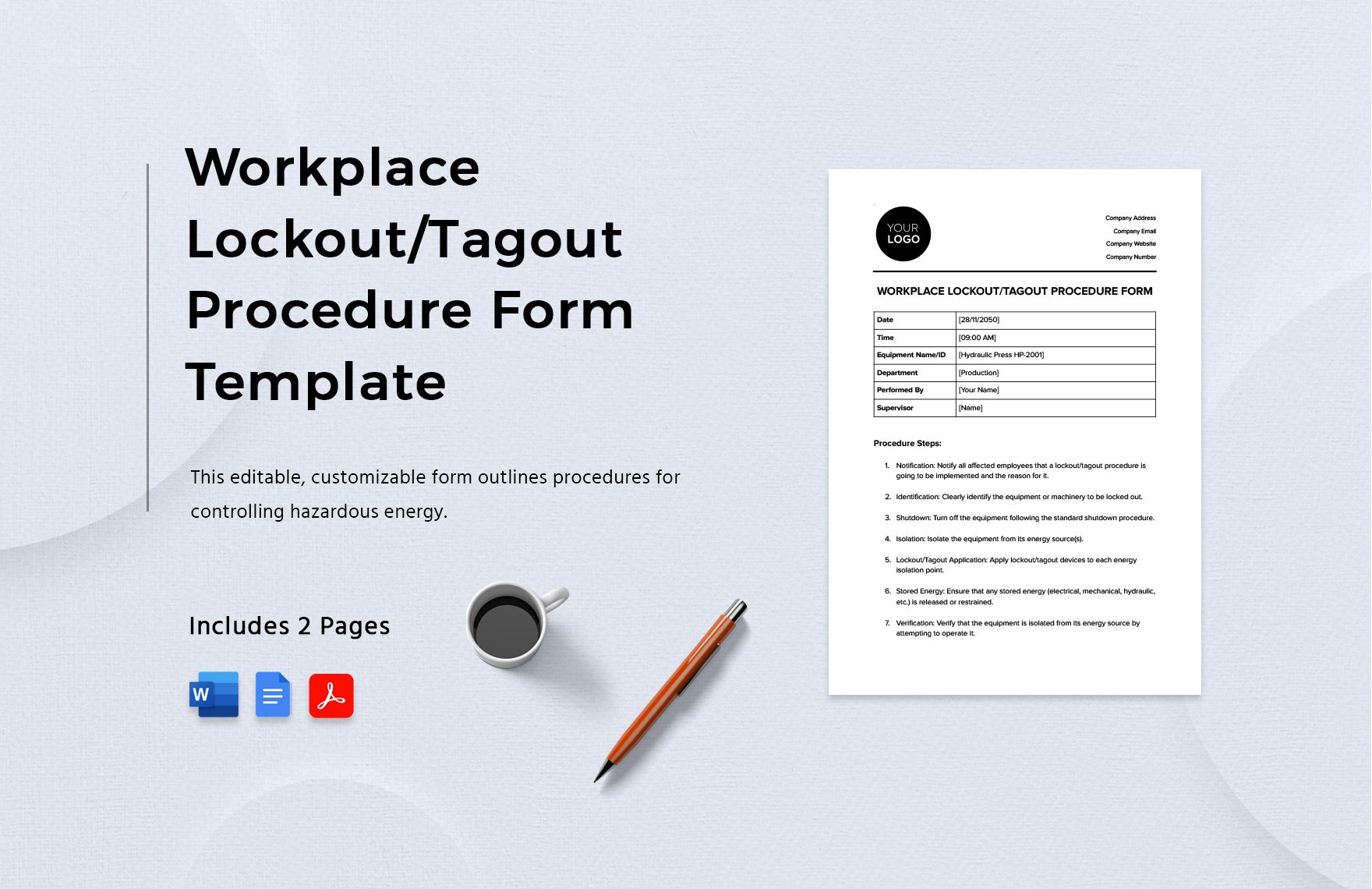
#### 6. Periodic Inspection Log A section for auditors to review and certify procedures every 12 months, as required by OSHA.
Avoid templates that lack verification steps or fail to distinguish between authorized and affected employees. These omissions can invalidate your compliance during an audit.
Common Mistakes When Using Free Templates
A free template is a powerful tool—but only if used correctly. Here are the most frequent missteps:
- Using one procedure for all machines
- Each piece of equipment has unique energy sources and isolation points. A boiler’s LOTO process is not the same as a conveyor belt’s.
- Skipping employee training
- A template is not a substitute for training. OSHA requires documented training for both initial onboarding and re-certification every year.
- Failing to update procedures
- When equipment is upgraded or relocated, LOTO procedures must be revised. Outdated templates create false confidence.
- Overlooking group lockout scenarios
- Many free templates don’t address complex maintenance tasks involving multiple workers. A robust template includes a group lockout section with a primary lockbox and individual locks.
- Ignoring environmental factors
- In wet or corrosive environments, standard padlocks may fail. The best templates prompt users to select appropriate hardware (e.g., stainless steel locks, waterproof tags).
Pro tip: Print your LOTO procedures and laminate them. Attach them directly to equipment or post them nearby. Digital-only access creates delays during critical moments.
Top 5 Free Lockout Tagout Procedure Templates
While countless templates float online, most lack OSHA alignment or real-world usability. These five are vetted, practical, and legally sound:
| Provider | Format | Key Features | Best For |
|---|---|---|---|
| OSHA.gov | PDF/DOC | Official government sample, fully compliant | Audits, regulatory proof |
| Creative Safety Supply | DOCX/PDF | Editable, includes checklist, multilingual tags | Small teams, quick deployment |
| SafetySkills | Step-by-step flow, visual icons | Training integration | |
| Grainger | DOCX | Fillable fields, equipment log | Facilities with 10+ machines |
| LockoutTagout.com | ZIP package | Full program suite: policy, forms, logs | Complete program rollout |
Note: While OSHA’s template is authoritative, it’s more of a framework. For operational use, pair it with a more detailed version like Grainger’s or Creative Safety Supply’s.
How to Customize Your Free Template
A template is only as good as its customization. Follow this workflow:
- Conduct an energy inventory
- Walk through your facility and document every machine, its energy sources, and shut-off points.
- Assign equipment IDs
- Label each machine with a unique number or code. Reference this in your LOTO form.
- Map isolation points
- For each machine, identify:
- - Main disconnect switch
- - Valve closures
- - Bleed-off points for residual pressure
- Test verification steps
- Simulate the LOTO process with your team. Can they confirm zero energy using test instruments?
- Integrate with existing safety systems
- Link your LOTO logs to your incident reporting or CMMS platform.
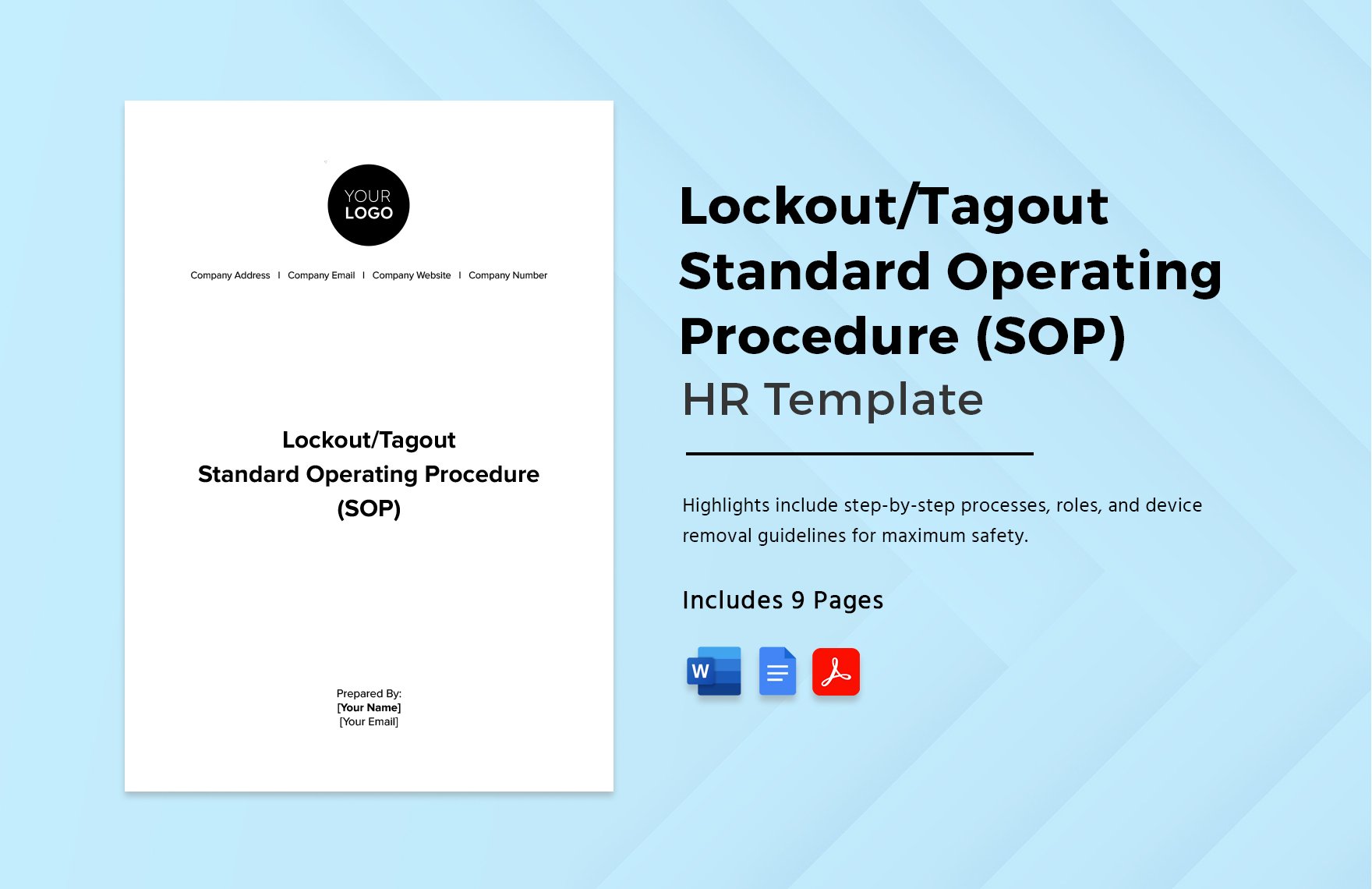
Example: A warehouse manager used the Creative Safety Supply template, customized it with QR codes linking to video instructions, and reduced lockout errors by 70% in three months.
Integrating LOTO Into Daily Operations
A procedure isn’t effective if it’s buried in a folder. Make LOTO part of your operational rhythm:
- Pre-job briefings: Start maintenance shifts with a 5-minute LOTO review.
- Toolkits: Provide portable LOTO kits with locks, tags, hasps, and circuit finder tools.
- Digital tracking: Use a simple Google Form or safety app to log each lockout event.
- Monthly audits: Randomly observe LOTO execution and provide feedback.
One food processing plant reduced downtime by 25% after introducing “LOTO stations” near production lines—pre-stocked with device kits and laminated procedures.
Limitations of Free Templates (And How to Overcome Them)
Free templates have blind spots. Recognize them early:
- No legal liability protection
- A template doesn’t shield you from lawsuits. You must validate procedures and train employees properly.
- Limited scalability
- Free versions often lack fields for multi-department workflows or contractor involvement.
- Static content
- Unlike paid platforms, free templates don’t auto-update when regulations change.
Mitigation strategy: Use the free template as a foundation, then layer in: - A live LOTO logbook - Annual third-party audits - Employee feedback loops (e.g., anonymous reporting of near-misses)
Actionable Next Steps
Don’t let compliance paralysis endanger your team. Here’s what to do today:
- Download a free LOTO template from OSHA or Creative Safety Supply.
- Customize it for your top 3 highest-risk machines.
- Train your authorized employees using the document.
- Conduct a live drill and verify zero energy state.
- Schedule your first annual audit.
A free lockout tagout procedure template isn’t just a document—it’s the first line of defense between routine maintenance and life-altering accidents. Use it wisely, adapt it continuously, and make it visible. Safety isn’t a one-time project. It’s a practiced discipline.
FAQ
Where can I download a free lockout tagout procedure template? Reputable sources include OSHA.gov, Creative Safety Supply, and Grainger. All offer free, downloadable, and editable templates.
Is a free LOTO template OSHA-compliant? It can be—provided you customize it to your equipment, train employees, and conduct annual inspections. The template itself is a starting point, not a compliance guarantee.
What’s the difference between lockout and tagout? Lockout uses physical devices (like padlocks) to disable energy sources. Tagout uses warning tags. OSHA prefers lockout; tagout is allowed only if it provides equivalent protection.
Who should use a LOTO template? Any business that services or maintains equipment with hazardous energy—factories, hospitals, labs, HVAC teams, and utilities.
Can I use a digital LOTO template? Yes, if it’s accessible during maintenance, tamper-proof, and includes electronic signatures. Many companies use PDFs on tablets with offline access.
Do I need a different template for each machine? Not a separate template—but a unique procedure within your master template for each machine, detailing its specific energy controls.
How often should LOTO procedures be reviewed? Annually, per OSHA. Also review after equipment changes, incidents, or near-misses.
FAQ
What should you look for in Free Lockout Tagout Procedure Template for Workplace Safety? Focus on relevance, practical value, and how well the solution matches real user intent.
Is Free Lockout Tagout Procedure Template for Workplace Safety suitable for beginners? That depends on the workflow, but a clear step-by-step approach usually makes it easier to start.
How do you compare options around Free Lockout Tagout Procedure Template for Workplace Safety? Compare features, trust signals, limitations, pricing, and ease of implementation.
What mistakes should you avoid? Avoid generic choices, weak validation, and decisions based only on marketing claims.
What is the next best step? Shortlist the most relevant options, validate them quickly, and refine from real-world results.